
KEYNOTE 1
Adversarial Debiasing via Agentic Orchestration for Automated Fairness Enforcement
Speaker: Prof. Nahla Ben Amor
Affiliation: Institut Supérieur de Gestion de Tunis (ISG), University of Tunis, Tunisia
Abstract. Machine learning models are increasingly used in sensitive areas such as credit scoring, recruitment, justice, and public services. They learn from historical data that carries the trace of past decisions, and can therefore reproduce the biases present in that data. Adversarial debiasing is one of the approaches used to limit this problem. A classifier learns to predict the target, while an adversary tries to recover the sensitive attributes from the representations learned by the model. By making this recovery more difficult, the classifier learns to rely less on those attributes. In practice, the method remains hard to control. The strength of the fairness constraint is set by hand before training, with no mechanism to target a given fairness level, and the sensitive attributes must be declared manually for each dataset. This talk presents an agentic approach to adversarial debiasing. The system identifies the sensitive attributes, measures fairness at each step of training, and automatically adjusts the constraint applied to the model, protecting several sensitive attributes within a single run. Fairness is no longer a fixed setting, but a decision revised throughout learning. The approach is evaluated on the FFB benchmark and on HIMS-Tunisia, a dataset from Tunisia’s national migration survey, and compared with reference methods.
Biography. Nahla Ben Amor is a Professor of Business Computing at the Institut Supérieur de Gestion de Tunis (University of Tunis), where she heads the Doctoral School of Management Sciences. She led the LARODEC laboratory from 2013 to 2025 and is an associate member of IRIT (Toulouse) and of the scientific council of the Maison des Sciences de l’Homme et de la Société de Toulouse. Her research focuses on reasoning and decision-making under uncertainty, in particular probabilistic and possibilistic graphical models, preference representation and collective decision-making. More recently, she has been working on responsible AI, especially algorithmic fairness and the governance of intelligent systems. She is a certified ISO/IEC 42001 Senior Lead Auditor. She has supervised some twenty PhD theses and published more than one hundred international papers. She co-chairs a track of ECAI 2027 and the program committee of ECSQARU 2027, and serves on the program committees of IJCAI and UAI.
KEYNOTE 2
Next-Generation Intelligent Motion Control: Dual-Parallel Fuzzy-Neural Architectures for High-Precision Industrial AC Drives
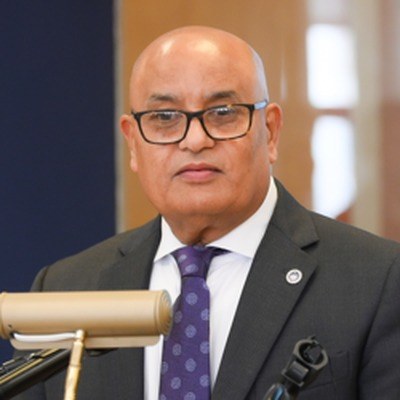
Speaker: Prof. Ahmed Rubaai, Life Fellow, IEEE
Affiliation: Electrical Engineering and Computer Science Department, Howard University, Washington, DC, USA
Abstract. This keynote presentation introduces a novel artificial intelligence (AI) control architecture engineered to succeed traditional Proportional-Integral-Derivative (PID) controllers in high-precision speed trajectory tracking for industrial alternating current (AC) drive systems. The proposed framework features a dual-parallel structure comprising two four-layer fuzzy-neural networks configured to replicate and advance classical PI and PD control actions. Crucially, the foundational fuzzy rules are synthesized directly from the physical operational knowledge of the drive system, embedding domain expertise into the intelligent controller. To achieve superior operational adaptability, a hybrid real-time learning paradigm—integrating Particle Swarm Optimization (PSO), Genetic Algorithms (GA), and Backpropagation (BP)—is deployed to dynamically optimize the network weights and membership functions. This mechanism equips the initial fuzzy design with robust self-learning capabilities, enabling the system to mitigate complex nonlinearities and parameter variations seamlessly. Unlike static, non-adaptive FL controllers, this self-tuning capability enables the drive system to dynamically counteract performance degradation caused by mechanical wear or shifts in electrical characteristics over time. Finally, the efficacy and robustness of the complete control solution are demonstrated through rigorous experimental validation on an industrial AC drive. Velocity control performance is evaluated utilizing a high-fidelity hardware-in-the-loop (HIL) emulation platform centered on a dSPACE DS1104 board and the MATLAB/Simulink environment.
Biography. Ahmed Rubaai received the M.S.E.E. degree from Case Western Reserve University, Cleveland, OH, in 1983, and the Dr. Eng. degree from Cleveland State University, Cleveland, OH, in 1988. He joined Howard University, Washington, DC, in 1988, where he is currently Professor and Chair of the Department of Electrical Engineering and Computer Science. Dr. Rubaai was named an IEEE Fellow in 2015. His research focuses on high-performance drives, knowledge-based control structures, intelligent manufacturing systems, and industrial applications. He is the founder and lead developer of Howard University's state-of-the-art Silicon Microchip Design and Validation Laboratory, recognized by President Ben Vinson III as one of the “Twenty-Four Moments that Defined Howard in 2024.” He also established the innovative 4+1 Accelerated Dual-Degree Program in Computer Engineering with a concentration in Chip Design and Validation. In addition, Dr. Rubaai has extensive expertise in ABET accreditation for engineering and computer science programs, and has successfully led accreditation reviews for Electrical Engineering, Computer Engineering, and Computer Science. His many honors include the IEEE IAS Prize Paper Award, ASEE Best Paper Award, NASA Glenn Software Release Award, and multiple Howard University teaching and service awards. He has also held several leadership positions in IEEE and ASEE, including Chair of the IEEE-IAS Publications Department and Chair of the ASEE Division of Experimentation and Laboratory Oriented Studies.
